
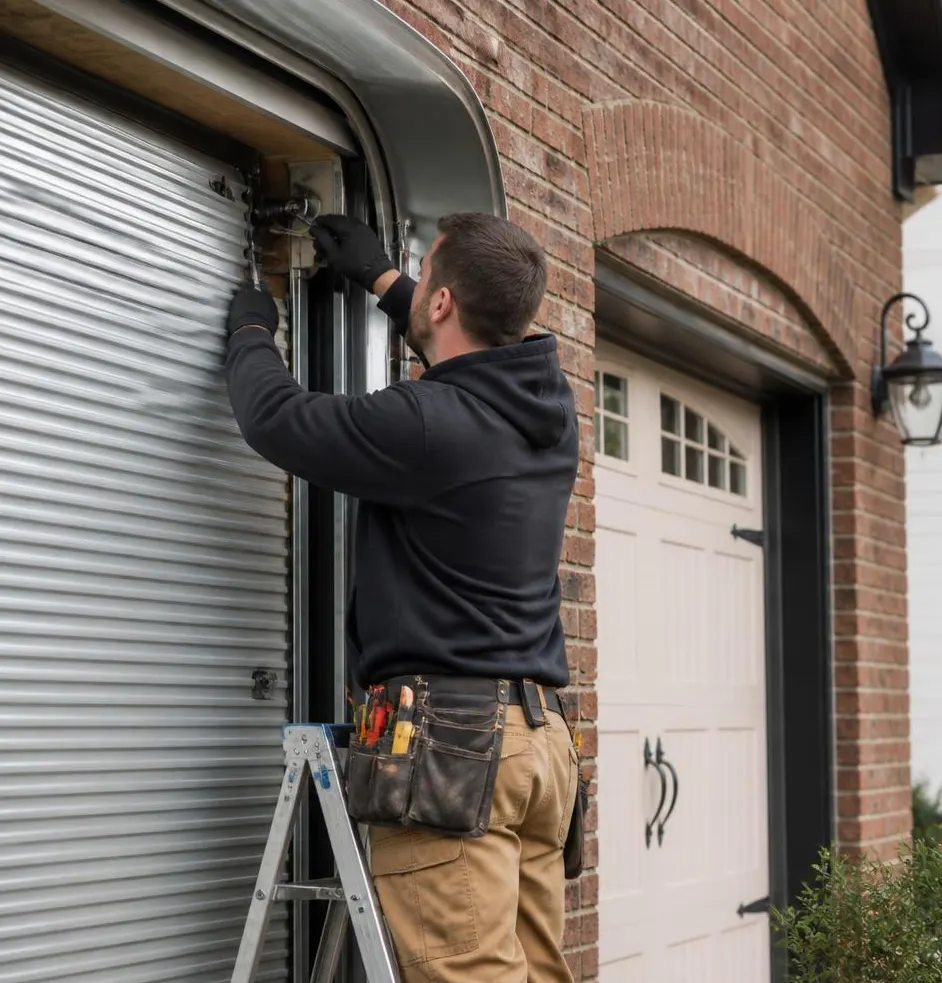
Why Your Garage Door Sticks or Stalls on Rare Cold Mornings
Rule of thumb: if your garage door feels stuck or sluggish on a chilly morning in Otter Creek, ice is rarely the real cause. Unlike homes up north, a door here isn't fighting weeks of hard freeze. The exceptions are the handful of nights each winter when a cold front pushes temperatures down near or just below freezing, especially inland in places like Bronson or Chiefland where there's no coastal water to moderate the air. On those mornings, condensation that collected on the slab overnight can turn into a thin skin of ice right where the bottom seal meets the concrete, and that's enough to make the door feel glued shut for the first pull of the day.
Symptoms to Watch For
- The door starts to lift, then the opener strains or reverses before it clears the floor.
- You hear a cracking or peeling sound right as the door releases, like tape coming off a box.
- The bottom rubber seal looks flattened, shiny, or stuck to the concrete when you look closely.
- The door moves unevenly, jerking on one side more than the other.
- Once the door is open for a few minutes, it runs smoother, which points to something temperature or moisture related rather than a mechanical failure.
What a Technician Checks, In Order
1. The Bottom Seal and Slab
This is the first thing checked because it's the most common culprit on a cold, damp morning. Florida's humidity means the vinyl or rubber seal along the bottom of the door often stays slightly damp. On a cold night that moisture can freeze into a thin bond between the seal and the concrete. More often, especially outside a true cold snap, the seal has simply swollen from months of humidity and is dragging against the track or floor. The fix is straightforward: a worn or overly soft seal gets replaced, and a stiff or warped one gets trimmed or swapped so it seats properly without binding.
2. The Tracks for Rust or Debris
Next, a tech runs a hand and a flashlight along both tracks. Afternoon downpours followed by humid, salty air (worse the closer you are to Cedar Key or Yankeetown) speed up surface rust on steel tracks, and rust creates friction that mimics a frozen door. Dirt or pollen buildup from sitting open during a storm can do the same thing. The fix is cleaning the tracks with a mild degreaser, checking for pitting, and realigning any section that's bent or pulled away from the wall.
3. Rollers and Hinges
Rollers and hinge pins are checked for corrosion and dried-out lubricant. Salt air near the coast and constant humidity inland both shorten the life of standard lubricant faster than it would last in a drier climate, leaving metal-on-metal contact that feels stiff, especially when the metal itself has contracted slightly in cooler air. The fix here is simple maintenance: cleaning off old grease and grime, then applying a silicone-based lubricant rated for garage door hardware, which holds up better in humidity than household oil.
4. Spring Tension
If the seal, tracks, and rollers all check out, the springs are next. Torsion springs lose a small amount of tension as temperatures drop, and in a door that's already a little under-tensioned from age or humidity-related wear, that can be enough to make the opener work harder and the door feel sluggish. Adjusting spring tension is not a DIY job since the springs are under heavy load, but a technician can rebalance or replace a worn spring in one visit.
5. Opener Settings and Motor
Last on the list is the opener itself. Cold, stiff mechanical parts make the motor work harder to lift the same door, and if the force or limit settings were set when everything was moving freely, the opener may now sense too much resistance and reverse or stall. Reprogramming the force settings, or replacing a motor that's been overworking itself for years, usually solves this.
When to Call Otter Creek Garage Door
If your door is sticking, grinding, or reversing more than once or twice during a cold snap, it's worth having it looked at before hurricane season demands that door work flawlessly under wind load. Otter Creek Garage Door can handle this with a straightforward Garage Door Maintenance & Tune-Up, which covers lubrication, track alignment, and seal inspection in one visit. If the issue traces back to worn springs or a seal that's beyond saving, our Garage Door Spring Repair service gets the door back to lifting smoothly and safely.
If your garage door in Otter Creek, FL is sticking on cold mornings or just feels like it's working harder than it should, call Otter Creek Garage Door for a quick, honest inspection and get it fixed before winter's cold snaps and next season's storms put more strain on it.